Irregular cycle timing
Irregular periods: individual Chinese medicine care
Explore irregular periods, changes in flow and cycle tracking with Elizabeth Yau in Central. Individual TCM advice alongside appropriate medical assessment.
When people come in
- Cycles that vary from month to month
- Changes in flow or duration
- Difficulty tracking your cycle when trying to conceive
The TCM view of irregular periods
When timing swings early and late, Chinese medicine looks at the Liver’s role in keeping Qi moving and the Kidney’s role in storing. If either falters, the rhythm becomes harder to hold.
Common patterns
Liver Qi constraint
Worse under stress, breast tenderness, irritability
Kidney deficiency
Lower-back ache, night urination, variable flow
Spleen deficiency
Poor appetite, loose stools, fatigue
Patterns are identified by a practitioner through all four examinations. They are here to explain the thinking, not for self-diagnosis.
The medical view
Your age, contraception and life stage matter. Cycles may change around puberty, after birth or approaching menopause. Persistent abnormal bleeding, bleeding between periods or after sex needs medical assessment.
Seek prompt medical help for heavy bleeding with dizziness, breathlessness or weakness.
What the consultation covers
A consultation connects your cycle diary with stress, nutrition and medication. Gynaecological or hormonal assessment may be needed. TCM care is individualised, with follow-up focused on changes in symptoms and everyday wellbeing.
Therapies that may be discussed: Herbal medicine
Different changes need different questions
Changing cycle length: compare with your usual pattern
Irregular periods are more than failing to bleed on the same date each month. Your previous pattern, when changes began and accompanying symptoms matter. App predictions are estimates; actual dates and what you experienced provide a more useful starting point for consultation.
Flow and spotting: avoid assuming it is just timing
Record heavier or longer bleeding and spotting between periods, as well as timing. Bleeding after sex or repeatedly between periods needs medical assessment. TCM advice can be considered alongside that process, but a traditional explanation should not stand in for investigation of abnormal bleeding.
Setting useful goals for TCM cycle care
Trying to conceive: timing is only one part
When you are trying to conceive, bring cycle records and any ovulation or fertility investigations. Regular bleeding is not the same as fertility, and blood colour cannot establish egg quality. Care should fit your medical plan and current symptoms without postponing assessment until every cycle is predictable.
Everyday care: choose changes you can sustain
A busy schedule or shift work may make an ideal routine unrealistic. Start with the problem that affects you most and discuss achievable adjustments. Follow-up compares cycle and symptom records and revises care when needed, rather than applying the same food restrictions or treatment course to everyone.
What to bring
- Period and spotting dates
- Flow, pain and associated symptoms
- Contraception and medication details
Discuss the next step for your circumstances
To discuss your symptoms and suitable support, gather your history, medication and available findings, then contact Elizabeth Yau through WhatsApp. In-person consultations are in Central; online consultation can also be discussed. Arrange physical examination or medical follow-up where needed.
You may also want to read: Late or missed periods · Period pain · Preconception care
Questions
Must every cycle be 28 days?
No. Your usual pattern and changes over time matter more than matching one number.
Do irregular periods mean I cannot conceive?
Not necessarily. Ovulation may be harder to predict, but fertility needs a broader assessment.
What should I bring for irregular periods?
Bring actual period dates, spotting and flow notes, medication and any test results. You can still discuss your concerns if your records are incomplete.
Can TCM care be discussed while taking hormonal medication?
Discuss it with both practitioners and share all medicines, herbs and supplements. Compatibility needs individual review; do not stop prescribed treatment yourself.
Does light bleeding always mean Blood deficiency?
No. A TCM pattern needs a wider assessment, while contraception and other medical factors may be relevant. Light flow alone is not a reason to self-prescribe tonics.
Related reading
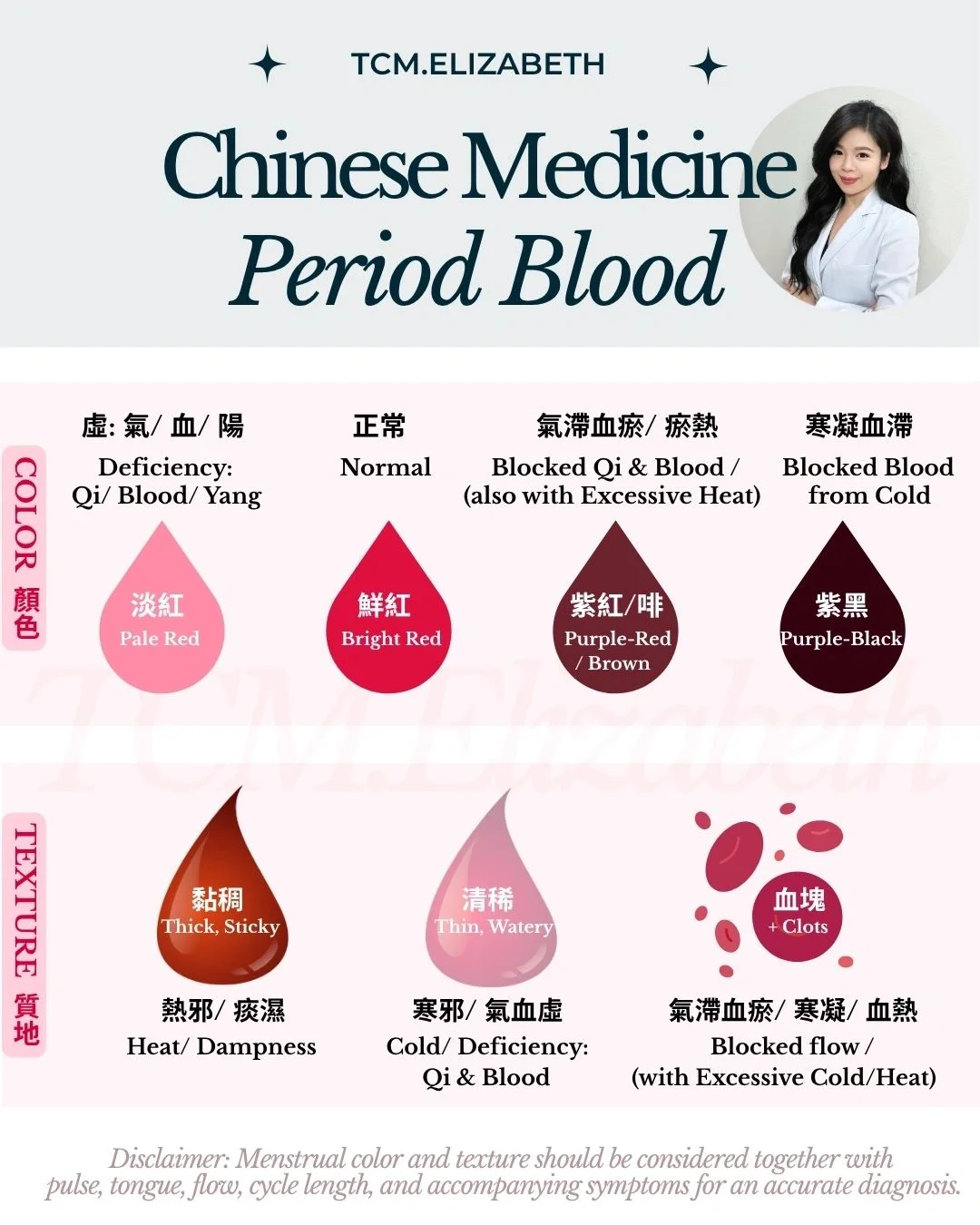
Chineses Medicine - Period Blood: Colors, Textures, Root Causes
Your period blood is like a monthly health report. Through the TCM lens, its color, thickness, and flow offer clues about Qi, Blood, Yin–Yang, and organ system balance. These patt

6 Things I Want Women Aged 25–34 to Know: From a TCM Practitioner
Your 20s and early 30s are often considered a time when the body is naturally full of energy and vitality.
6 Things I Want Women Aged 35–44 to Know: From a TCM Practitioner
For many women, this is the stage where life becomes fuller — careers, relationships, family responsibilities, and personal goals all compete for attention. At the same time, the b

What to Eat After Your Period (According to Chinese Medicine)
After your period, the body enters the post-menstrual phase, during which the focus in Traditional Chinese Medicine (TCM) is to nourish Blood and Yin. This helps replenish the body