Premenstrual patterns
PMS: Chinese medicine support for premenstrual symptoms
Explore premenstrual mood changes, bloating, breast tenderness and sleep with Elizabeth Yau. Individual TCM advice, symptom tracking and appropriate medical support.
When people come in
- Irritability or low mood before periods
- Bloating, breast tenderness or sleep changes
- Symptoms returning at a similar point each month
The TCM view of premenstrual symptoms
Before a period, Qi and Blood gather in the lower body. If Liver Qi is constrained or digestion is weak, mood, breast, gut and sleep changes tend to surface in these days.
Common patterns
Liver Qi stagnation
Irritability, breast distension, frequent sighing
Spleen deficiency with damp
Bloating, puffiness, loose stools
Heart and Spleen deficiency
Poor sleep, palpitations, low mood
Patterns are identified by a practitioner through all four examinations. They are here to explain the thinking, not for self-diagnosis.
The medical view
Track whether symptoms appear before your period, improve afterwards and affect daily life. Significant mood symptoms deserve proper assessment, rather than being dismissed as just hormones.
What the consultation covers
Review sleep, meals, movement and stress alongside an individual TCM assessment. A symptom diary helps guide follow-up, with medical or mental-health support when appropriate.
Therapies that may be discussed: Acupuncture, Cupping, Gua sha
Recognising a premenstrual pattern
Before your period: record when symptoms settle
PMS can involve physical discomfort and sleep as well as mood. The relationship to your cycle matters more than one difficult day. Review which symptoms return, when they peak and whether they ease after bleeding begins, so the discussion addresses your actual pattern.
Persistent or severe mood symptoms need assessment
Low mood throughout the month, or severe cyclical symptoms disrupting life, needs medical assessment. PMDD is distinct from ordinary premenstrual discomfort. A TCM discussion can sit alongside mental-health care, but a traditional pattern should not explain away distress or make you feel you should cope through willpower.
Start PMS care with what affects you most
A useful diary can stay simple
A simple diary across at least two cycles helps show timing and impact. Note period dates, sleep, mood and physical symptoms without making tracking a burden. The consultation can combine this record with a TCM assessment, and use it to review changes rather than relying on the last few days alone.
Routines and treatment choices can be discussed gradually
Discuss manageable changes to sleep, meals or activity before deciding whether other support suits you. Share contraceptives, psychiatric medication and supplements. Significant symptoms may need medical treatment as well; complementary options should be considered with realistic expectations and medication safety in mind.
What to bring
- Symptoms across at least two cycles
- Medication, supplements and contraception
- Your main mood or sleep concerns
Discuss the next step for your circumstances
To discuss your symptoms and suitable support, gather your history, medication and available findings, then contact Elizabeth Yau through WhatsApp. In-person consultations are in Central; online consultation can also be discussed. Arrange physical examination or medical follow-up where needed.
You may also want to read: Irregular periods · Period pain · Perimenopause support
Questions
Are PMS and PMDD the same?
No. PMDD involves more severe premenstrual mood symptoms and requires professional assessment.
Do I have to take herbs?
No. Your preferences and needs guide the options discussed.
Is breast tenderness always PMS?
Check whether it follows the cycle. A new lump, persistent local pain or nipple discharge needs medical assessment rather than being assumed to be PMS.
Can I discuss premenstrual insomnia in the same visit?
Yes. Describe difficulty falling asleep, waking or waking early, and whether it is cyclical. Sleep, mood and physical symptoms can be considered together.
Should I buy supplements for premenstrual mood changes?
Do not rush to add products. Supplements can interact with medication; review your symptoms and existing treatment with an appropriate professional first.
Related reading
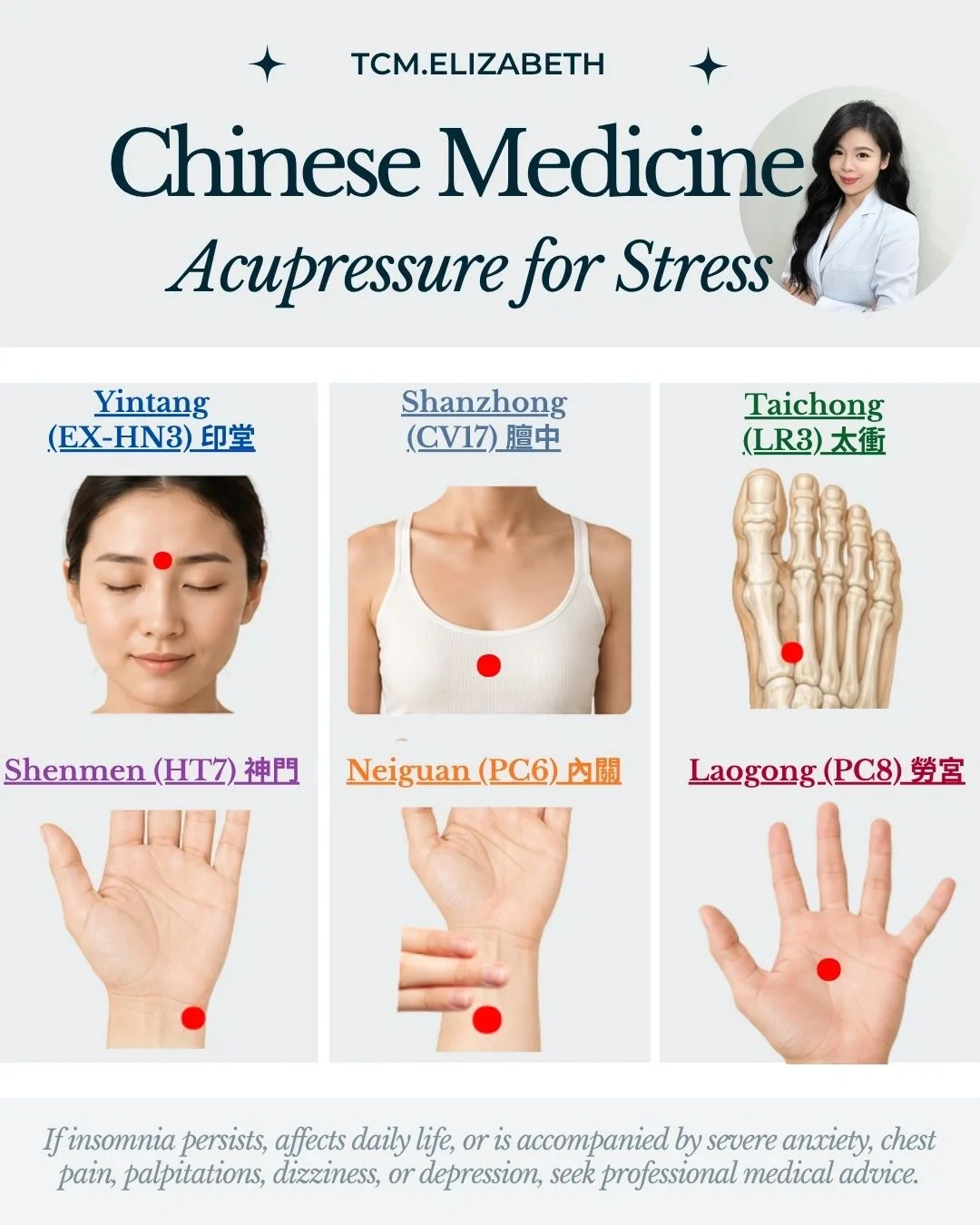
Common Acupressure Points for Stress Relief & Emotional Balance
Modern lifestyles, work pressure, emotional stress, and constant mental activity can affect our mood, energy, and overall wellbeing. In Traditional Chinese Medicine (TCM), gentle

Period Foods for Your Chinese Medicine Body Type
In Traditional Chinese Medicine (TCM), menstrual diet advice should be tailored to the individual's constitution and menstrual pattern. What you experience during your period — suc
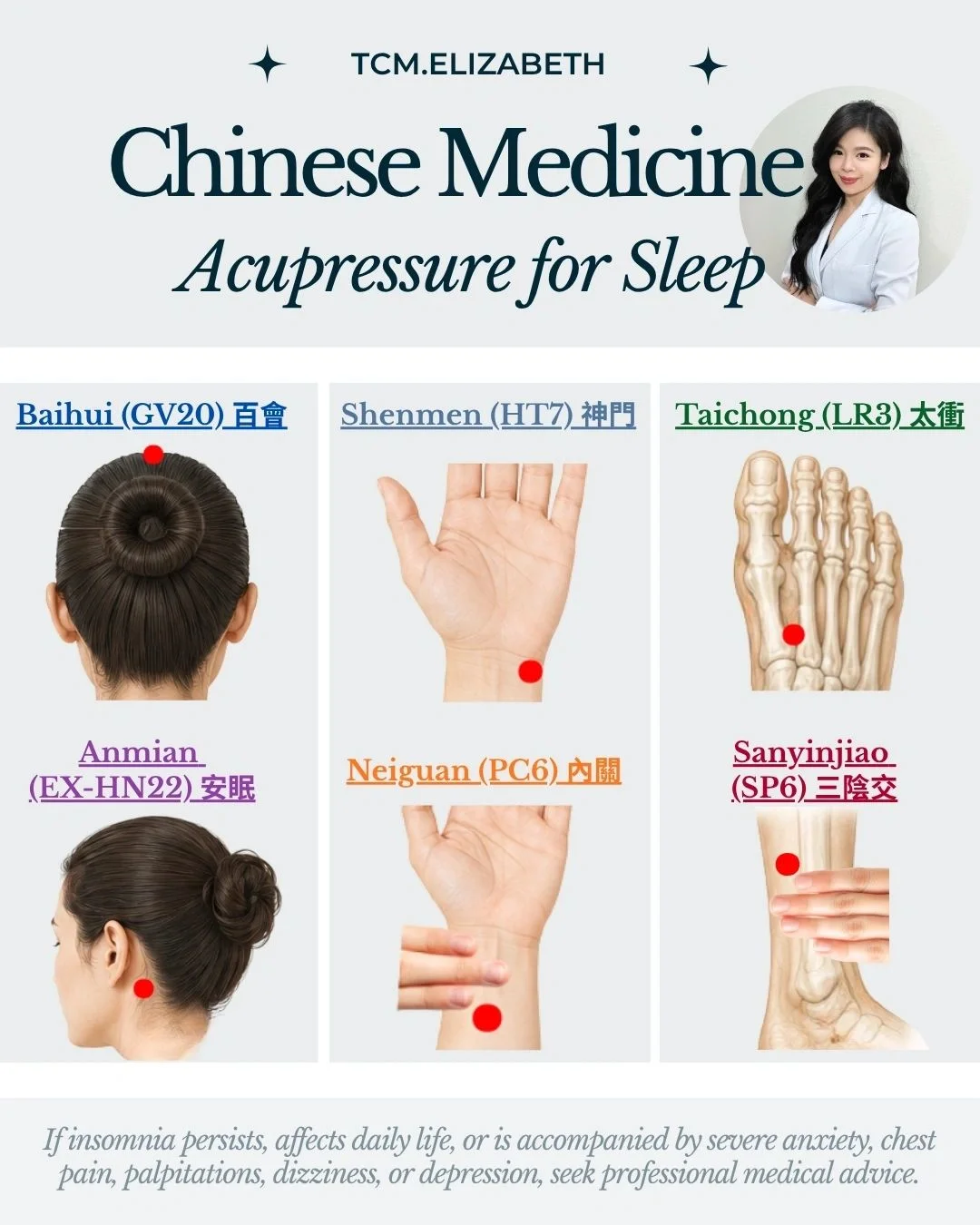
Common Acupressure Points for Relaxation & Sleep Support
Modern lifestyles, stress, anxiety, and irregular sleep schedules can all affect sleep quality. In Traditional Chinese Medicine (TCM), gentle acupressure is believed to help relax
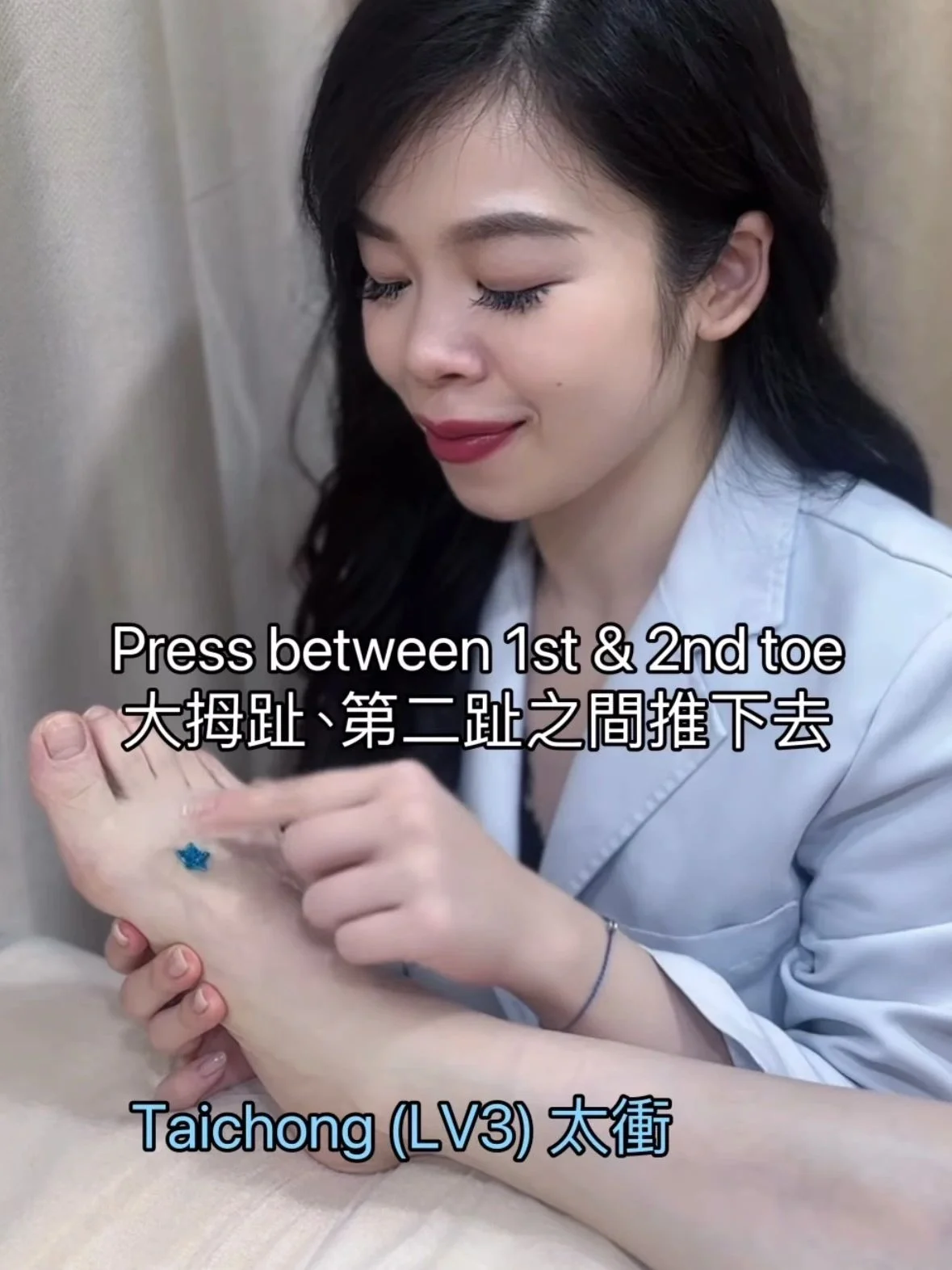
Acupressure for Stress & Anger
Check the Release Your Stress with Taichong Taichong is a key point on the Liver Meridian. It functions to soothe the liver and alleviate stress. Stimulating Taichon