Painful menstruation
Period pain: Chinese medicine and acupuncture support
Discuss cramps, backache and disruptive period pain with Elizabeth Yau in Central. Review acupuncture options, daily comfort and when medical investigation is needed.
When people come in
- Cramps or backache around your period
- Pain disrupting work, sleep or movement
- Pain that has changed or comes with pelvic symptoms
The TCM view of period pain
A classical saying holds that pain arises either where flow is obstructed or where tissue is under-nourished. Period pain is read through both lenses.
Common patterns
Qi and Blood stagnation
Distending or stabbing pain, clots
Cold with stagnation
Cold cramping, eased by heat, cold hands and feet
Damp-heat
Burning pain, dark sticky flow, yellow discharge
Qi and Blood deficiency
Dull ache after the period, better with pressure
Patterns are identified by a practitioner through all four examinations. They are here to explain the thinking, not for self-diagnosis.
The medical view
Period pain can be common, but endometriosis, adenomyosis and other pelvic conditions may also be involved. Worsening pain, painful sex or painful bowel movements should be discussed with a doctor.
Sudden severe pelvic pain, fever, fainting or bleeding in possible pregnancy requires urgent assessment.
What the consultation covers
Elizabeth asks about timing, location, flow, pain relief and daily impact. Acupuncture, individual TCM care and practical routines can then be discussed. Progress is reviewed through symptoms and daily function.
Therapies that may be discussed: Acupuncture, Moxibustion
Understanding your period pain pattern
Cramps around bleeding: describe their daily impact
Describe when pain starts, how it feels and whether backache, nausea or clots accompany it. These details inform a traditional assessment and help organise your history for medical care. Explain the practical impact too: missing work, waking at night or avoiding movement gives follow-up a meaningful focus.
Changing pain or pain between periods needs review
Pain that becomes worse, occurs outside periods or comes with painful sex or bowel movements deserves gynaecological assessment. Endometriosis, including an ovarian endometrioma sometimes called a chocolate cyst, and adenomyosis cannot be diagnosed from a TCM pattern. Supportive care can be discussed while continuing the medical plan.
Considering TCM alongside your current pain care
Acupuncture: discuss suitability and your preferences
Before considering acupuncture, share pain medication, diagnoses, possible pregnancy and bleeding concerns. Discuss your comfort with needles as well as suitability. Any plan should be individual; immediate relief and permanent resolution are not outcomes that can be promised to everyone.
Daily comfort and follow-up: focus on function
If warmth feels helpful, protect your skin and avoid excessive heat. Gentle movement can be adapted to comfort. At follow-up, compare pain, sleep interruption and everyday activity, not just whether a treatment felt relaxing. Persistent severe pain, increasing reliance on medication or new symptoms should prompt reassessment.
What to bring
- Pain timing, severity and location
- Scan results and pain medication
- Activities or sleep affected by pain
Discuss the next step for your circumstances
To discuss your symptoms and suitable support, gather your history, medication and available findings, then contact Elizabeth Yau through WhatsApp. In-person consultations are in Central; online consultation can also be discussed. Arrange physical examination or medical follow-up where needed.
You may also want to read: Irregular periods · Premenstrual symptoms · Support when conception is difficult
Questions
Will period pain simply go away with age?
That cannot be assumed. Persistent, disruptive or changing pain deserves assessment.
Can I discuss TCM if I have endometriosis?
Supportive care can be discussed alongside your gynaecological treatment. Share all medication and treatment details.
Can I discuss TCM while using pain relief?
Share the medicine, dose and frequency, and tell your doctor about herbs or supplements. Do not stop prescribed care simply to try complementary treatment.
Can acupuncture be considered with endometriosis?
Support for comfort can be discussed individually. Acupuncture does not establish a diagnosis or replace follow-up, and should not be presented as removing an endometrioma.
How is progress reviewed?
There is no universal timetable. Agree what to monitor and when to review it, using pain, daily function and any new symptoms to decide whether care should change.
Related reading
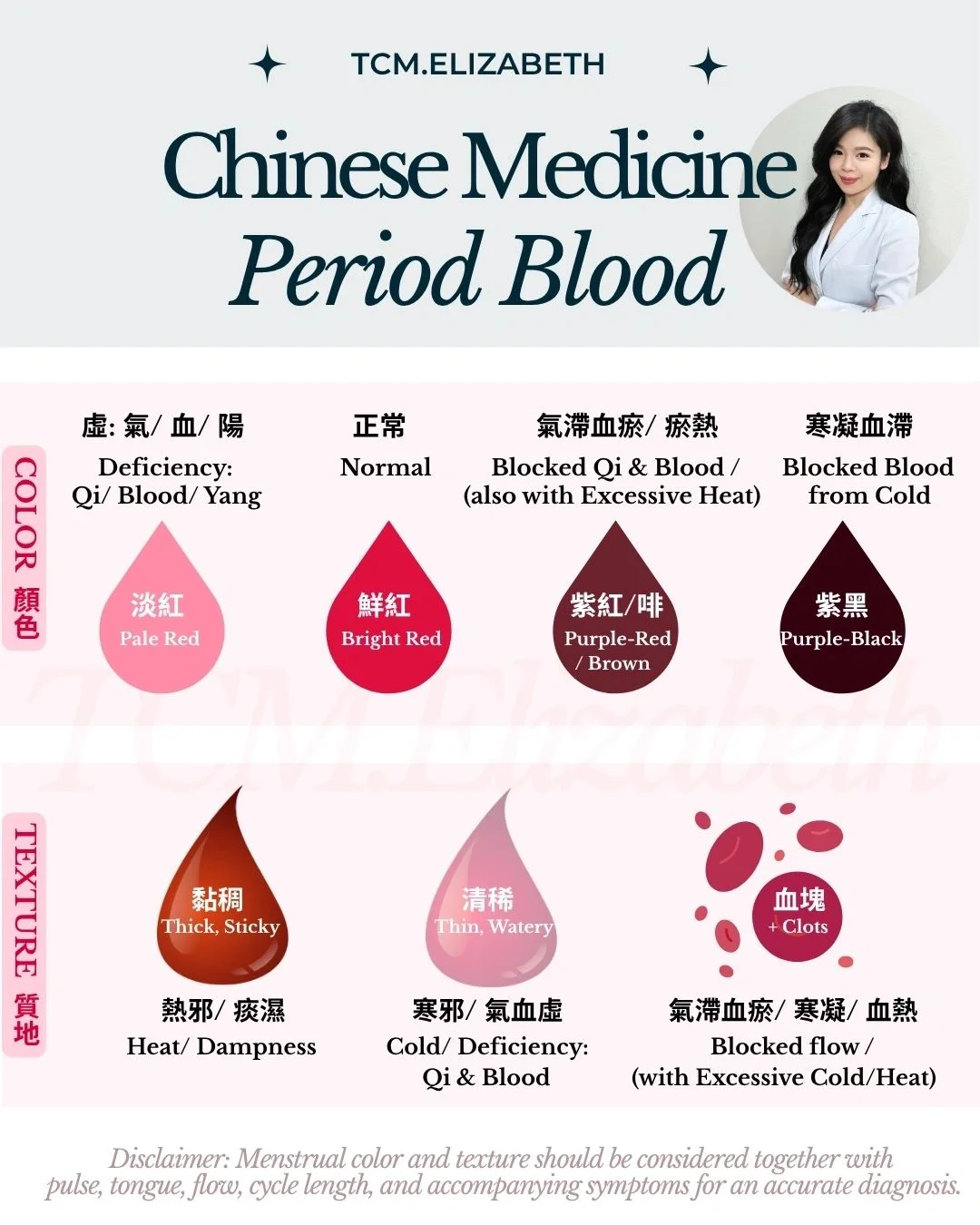
Chineses Medicine - Period Blood: Colors, Textures, Root Causes
Your period blood is like a monthly health report. Through the TCM lens, its color, thickness, and flow offer clues about Qi, Blood, Yin–Yang, and organ system balance. These patt

HK Girls Grew Up Hearing About Periods (Chinese Medicine view)
6 Things Hong Kong Girls Grew Up Hearing About Periods (Explained by Traditional Chinese Medicine)

What to Eat After Your Period (According to Chinese Medicine)
After your period, the body enters the post-menstrual phase, during which the focus in Traditional Chinese Medicine (TCM) is to nourish Blood and Yin. This helps replenish the body
Period Foods for Your Chinese Medicine Body Type
In Traditional Chinese Medicine (TCM), menstrual diet advice should be tailored to the individual's constitution and menstrual pattern. What you experience during your period — suc